Some antagonists want to destroy the hero. Others believe they are helping. In Whiplash (2014), written and directed by Damien Chazelle, the most frightening figure in the story is a teacher who insists that his cruelty is the only path to greatness. The film follows Andrew Neiman, a young jazz drummer at an elite music conservatory, as he falls under the influence of the conductor Terence Fletcher.
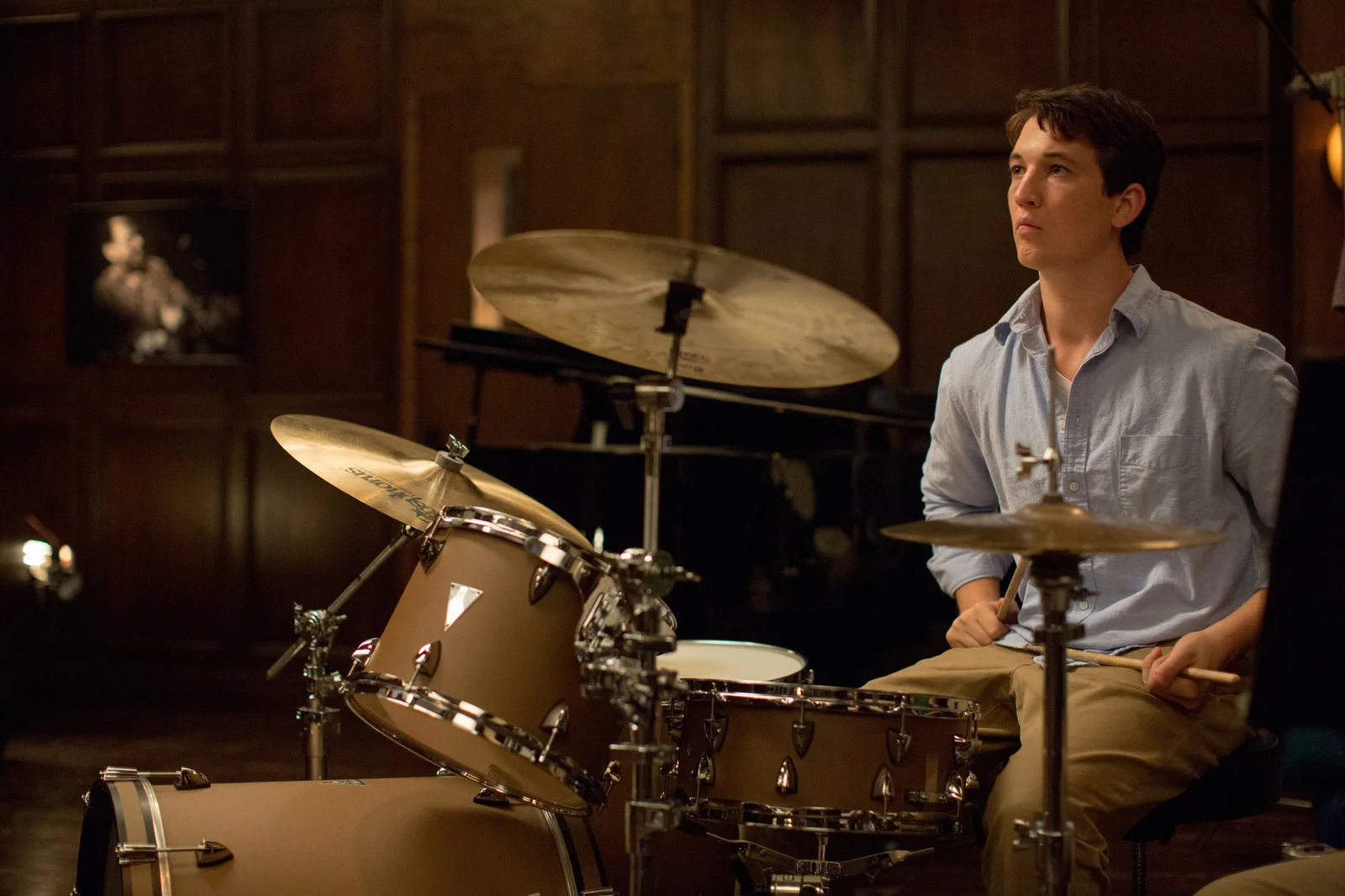
Still from 'Whiplash' (2014). Photo credit: Sony Pictures Classics
What makes the film so gripping is that Andrew wants the same thing Fletcher wants. He is not trying to escape. He is trying to impress the man who is breaking him. That turns the conflict into something far more complicated than a simple battle between good and evil.
Terence Fletcher: The Teacher as Tormentor
Fletcher is introduced as the gatekeeper to everything Andrew dreams of. Being chosen for his band is a sign that you might become one of the greats. Within minutes of Andrew's first rehearsal, however, Fletcher turns from charming to brutal, humiliating him in front of the entire band.
The power of the character lies in this unpredictability. Fletcher can be warm one moment and vicious the next, and Andrew never knows which version he will face. J.K. Simmons won the Academy Award for Best Supporting Actor for the role, but the foundation is on the page. Chazelle gives Fletcher a clear philosophy. He believes that real talent only emerges under extreme pressure, and he repeatedly tells the story of a young Charlie Parker having a cymbal thrown at him to justify his methods.
An Antagonist With a Belief System
The most memorable antagonists are rarely evil for the sake of it. They believe in something. Fletcher genuinely thinks that the world is full of comfortable mediocrity, and that he is the one person willing to push students far enough to find the next legend.
This belief makes him dangerous because it is partly persuasive. Andrew does improve. The audience, like Andrew, starts to wonder whether the suffering might be worth it. A good antagonist challenges the protagonist's values, and Fletcher forces both Andrew and the viewer to ask how much a person should sacrifice for success.
Andrew as His Own Enemy
Fletcher is not the only obstacle in the film. Andrew's ambition becomes an antagonistic force in its own right. He ends his relationship with Nicole because he believes it will distract him. He dismisses his father's gentle support. He practises until his hands bleed.
In one of the most intense sequences, Andrew is involved in a car accident on the way to a performance and still crawls from the wreck to take his seat behind the drums. The scene shows how completely his obsession has taken over. By this point, Fletcher hardly needs to push him. Andrew is pushing himself towards destruction.
The Family Dinner
A quieter scene at a family dinner reveals another layer of opposition. Andrew's relatives praise his cousins for their sporting achievements while treating his music as a minor hobby. Andrew responds with arrogance, declaring that he would rather die young and be remembered than live a long, forgettable life.
These relatives are not villains, but they represent the ordinary world that Andrew is rejecting. Their lack of understanding helps explain why Fletcher's approval matters so much to him. Fletcher is the only person who seems to take his ambition seriously.
The Final Performance
After Fletcher is dismissed from the conservatory, the two meet again, and Fletcher invites Andrew to play with his new band at a festival. On stage, Andrew discovers that he has been set up to fail, handed music he has never seen. It is Fletcher's revenge.
Instead of walking away, Andrew returns to the drums and takes control of the performance. The ending is thrilling, but it is also deeply unsettling. Andrew achieves the brilliance he wanted, and Fletcher finally appears to approve. The audience is left to decide whether this is a triumph or a tragedy, and whether Fletcher's methods have been proven right.
Final Thoughts
Whiplash shows how powerful an antagonist can be when they are tied to the protagonist's deepest desire. Fletcher is terrifying not because he stands in Andrew's way, but because he offers exactly what Andrew wants, at a terrible price.
For screenwriters, the lesson is to give your antagonist a philosophy that makes sense from the inside, and to let your protagonist's own flaws become part of the opposition. When the hero and the villain want the same thing, the conflict becomes impossible to look away from.