Some writers build their reputation on big ideas and complex plots. Greta Gerwig built hers on people. Her scripts are full of characters who talk too fast, make the wrong decisions, love their families in complicated ways and are still working out who they want to be. That honesty has made her one of the most influential screenwriters of her generation.
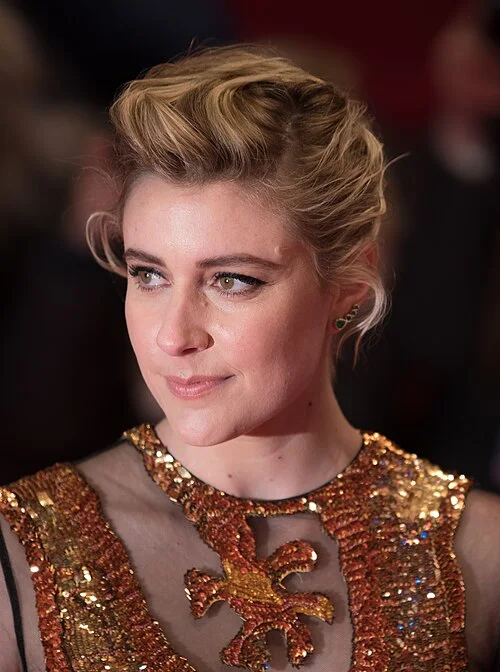
Greta Gerwig. Photo credit: Wikimedia Commons
Over the past two decades, Gerwig has moved from small independent films to some of the biggest releases in the world, including Lady Bird (2017), Little Women (2019) and Barbie (2023). Her career shows that a deeply personal voice does not have to stay small. If anything, it can be the thing that makes a story connect with millions of people.
Learning Through Collaboration
Gerwig began her career in the low budget independent scene of the late 2000s, acting in and co-writing films that relied heavily on improvisation and naturalistic performances. These projects had little money, but they gave her a valuable education in how real people speak and behave on screen.
Her partnership with Noah Baumbach became a turning point. Together they co-wrote Frances Ha (2012), in which Gerwig also starred as a young dancer in New York trying to hold her life together. The script is loose and funny, but it is also carefully observed. Frances is not chasing a single big goal. She is trying to keep up with friends who seem to be growing up faster than she is, and that small, relatable struggle carries the entire film.
Lady Bird and the Power of Specificity
Lady Bird was Gerwig's first film as solo writer and director, and it earned her Academy Award nominations for Best Original Screenplay and Best Director. The story follows a teenager in Sacramento during her final year of high school as she clashes with her mother and dreams of escaping to the East Coast.
What makes the script stand out is its specificity. The setting, the Catholic school, the money worries and the arguments in the car all feel lived in. Gerwig does not try to make the story universal by keeping it vague. Instead, she makes it so precise that audiences recognise their own families in it. It is a lesson every screenwriter can use. The more specific your details, the more people are likely to connect with them.
Mothers, Daughters and Unresolved Love
The relationship between Lady Bird and her mother, Marion, is the emotional heart of the film. They argue constantly, often in the middle of what should be tender moments, and neither of them knows how to say what they really feel. Yet the audience never doubts the love between them.
Gerwig writes conflict that comes from closeness rather than hatred. Her characters hurt each other because they care so much, and because they see parts of themselves in one another. That kind of conflict is harder to resolve, and much more interesting to watch.
Reinventing a Classic
With Little Women, Gerwig took on a story that had already been adapted many times. Rather than retelling it in a straight line, she restructured the narrative, moving between the March sisters as adults and their memories of childhood. The script earned her an Academy Award nomination for Best Adapted Screenplay.
The new structure changes how the story feels. Happy memories are cut against later disappointments, giving familiar scenes new weight. It also brings Jo's role as a writer to the foreground, connecting the story to the author who created it. For screenwriters working on adaptations, it is a strong reminder that faithfulness to a source does not mean copying it scene for scene.
Big Ideas in a Pink World
Barbie, which Gerwig co-wrote with Baumbach, became the highest grossing film of 2023. It could easily have been a simple brand comedy. Instead, the script uses a bright, playful world to explore identity, growing up and what it means to be human, while still delivering plenty of jokes. The screenplay was nominated for the Academy Award for Best Adapted Screenplay.
The film shows how far a confident voice can stretch. Gerwig brings the same interest in characters searching for themselves that drove Frances Ha and Lady Bird, only on a much larger canvas.
Final Thoughts
Greta Gerwig's work proves that personal stories can travel a long way. Her scripts are funny, messy and full of warmth, built around characters who feel like real people rather than plot devices.
For writers, the lessons are clear. Write what you have observed closely. Let your characters be contradictory. Find conflict in love as well as in opposition. And never assume that a small, specific story cannot reach a big audience.