When writers think about what makes a screenplay great, they usually think about story, character and dialogue. But a huge part of any script is made up of action lines: the description that tells the reader what we see and hear. These lines set the pace of the read, establish tone and create the images in the reader's head. Done badly, they turn a script into a chore. Done well, they make it almost impossible to put down.
Here is how to write action lines that are clear, vivid and fast to read.
Write What We See and Hear
The simplest rule of action lines is also the most important: describe only what can be seen or heard on screen. A camera cannot film a character's memories, their unspoken feelings or the history of the house they live in. If you write it, the reader has to imagine how it could possibly be shown.
That does not mean action lines have to be cold. A character can stare at a photograph for too long, or leave a phone ringing that they would normally answer. Those details show feelings through behaviour, which is exactly what a camera can capture.
Keep Paragraphs Short
Readers of screenplays move quickly. Dense blocks of description slow them down and make the page feel heavy before they have read a single word. A widely followed guideline is to keep paragraphs of action to around three or four lines, breaking them up whenever the focus shifts.
White space is your friend. A page with plenty of space feels fast, and it encourages the reader to keep going. Each new paragraph can also work like a new shot, guiding the reader's eye from one image to the next without you ever writing a camera direction.
Use Strong, Specific Verbs
Weak verbs force you to add extra words. A character who "walks quickly" could simply hurry, rush, stride or march, and each of those choices tells us something different about them. A door that "closes loudly" could slam.
Specific nouns work in the same way. "A car" gives the reader almost nothing. "A rusted pickup" or "a spotless black sedan" gives them an image and a sense of the people connected to it, often in fewer words.
Write in the present tense and the active voice. Screenplays describe events as they happen, and active sentences keep the energy moving forward.
Cut What Does Not Matter
It is tempting to describe every detail of a room, every item of clothing and every movement a character makes. But the reader only needs the details that matter to the story, the character or the mood.
Ask yourself what is essential in each moment. If a character sits down, picks up a cup, takes a sip and puts it down again, does any of that matter? If not, cut it. If the way they grip the cup tells us they are furious, keep that one detail and lose the rest. Directors, designers and actors will fill in everything else.
Let Your Voice Come Through
Action lines are where your personality as a writer shows most clearly. Some writers use sparse, almost poetic description. The screenplay for Alien is often praised for its stripped down, rhythmic action lines that read almost like verse. Others, such as Shane Black, are famous for chatty, conversational asides that speak directly to the reader.

Still from 'The Predator' (2018), directed by Shane Black. Photo credit: 20th Century Fox
There is no single correct style, but your action lines should feel consistent and suit the tone of the story. A comedy can be playful on the page, while a horror script benefits from description that builds dread. A reader should be able to sense the kind of film they are reading before anyone speaks.
Control the Pace With Rhythm
The way you arrange sentences changes how a scene feels. Long, flowing sentences slow the reader down and suit quiet, reflective moments. Short sentences speed things up. They create urgency. Tension. Panic.
In an action sequence, short lines and frequent paragraph breaks make the reader move as fast as the characters. In an emotional scene, a slightly longer line can let a moment breathe. Think of the page as a rhythm the reader feels, not just information they absorb.
Avoid Directing on the Page
Many new writers fill their action lines with camera directions such as close ups, pans and angles. In a spec script, these usually get in the way. They interrupt the read and can make the writer seem as if they are trying to direct the film rather than write it.
You can usually achieve the same effect through the way you write. If you want a close up on a ring, give the ring its own line of action. If you want the reader to notice something in the background, mention it at the right moment. The reader will see the shot without you naming it.
Introduce Characters Memorably
The first time we meet a character in the action lines is one of the most important moments in the script. Their name is typically written in capitals the first time they appear, often followed by their age and a short description.
The best character introductions focus on attitude and behaviour rather than physical details. Instead of describing hair colour and height, give the reader one or two sharp details that show who this person is. A short, vivid introduction will stay with the reader far longer than a full physical inventory.
Read It as a Reader Would
Once you have a draft, read your action lines quickly, as a busy reader would. Notice where your eye starts to skip. Those are the passages that are too long, too detailed or too repetitive.
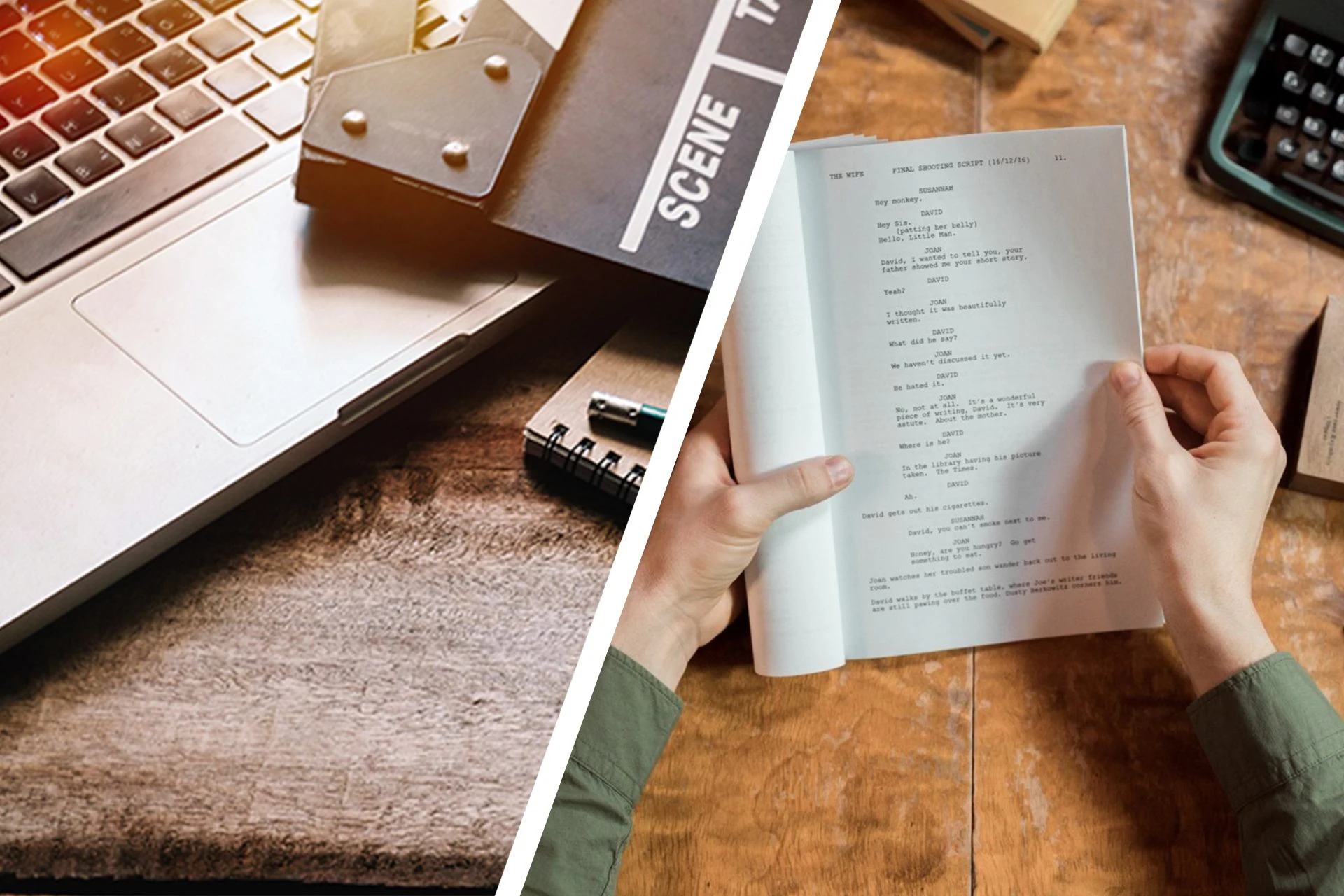
It can also help to print the script and look at the shape of each page. Pages that look like solid blocks of text usually need to be broken up, trimmed or rewritten. A well written script often looks inviting before you have read a single word.
Bringing It All Together
Action lines are not filler between dialogue. They are where you build images, set the pace and show your voice. Write only what we can see and hear, keep paragraphs short, choose strong verbs and specific nouns, cut what does not matter and let the rhythm of your sentences match the energy of the scene.
Get those things right, and your screenplay will read the way a good film plays: quickly, clearly and with the reader always eager to see what happens next.